
29.05.2026
- minute readminutes read
The Oral Microbiome: Why the Mouth Is an Ecosystem, Not a Battleground
For most of modern dentistry’s history, the clinical goal of dental professionals has been focused on removing plaque, lowering bacterial levels, and preventing disease. This approach has produced real, measurable results and still forms the foundation of care today. However, new scientific insights are revealing a more complex and meaningful picture.

The mouth is not just a place where bacteria need to be controlled. It is a living, constantly changing ecosystem that contains billions of microorganisms. These organisms play an active role in maintaining health, regulating inflammation, and protecting the body from disease.
Gaining a deeper understanding of this system, known as the oral microbiome, is quickly becoming one of the most important developments in modern dentistry.
This represents a shift in clinical thinking with practical consequences. It changes how oral health and disease progression is understood, highlighting the growing importance of oral healthcare professionals in influencing overall health outcomes.
What is oral microbiome?
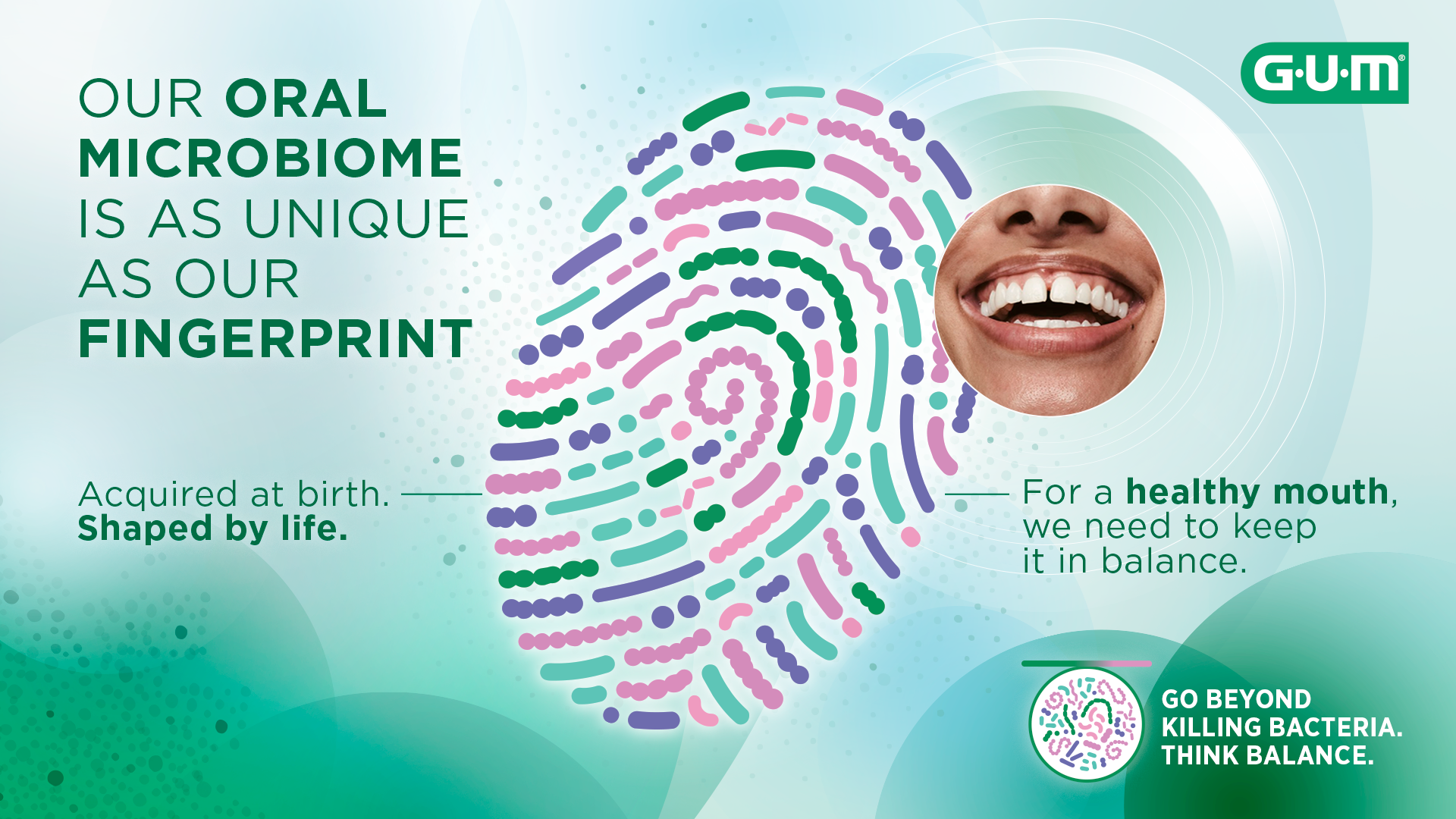
The oral microbiome refers to the entire community of microorganisms that inhabit the mouth (bacteria, fungi, viruses, protozoa, and archaea) along with the environment they collectively create. It is one of the most complex microbial communities in the human body.
More than 700 different bacterial species have been identified within the oral cavity — a figure made possible by advances in next-generation sequencing (NGS), which has allowed researchers to map microbial communities with a precision that culture-based methods simply could not achieve.
At any given time, a healthy individual typically hosts around 200 of these species, with communities dominated by genera such as Streptococcus, Actinomyces, Neisseria, Rothia, and Veillonella. These are not incidental passengers. They are active participants in oral health. And, as the science increasingly shows, in systemic health too.
The ecosystem is site-specific
The mouth microbiome is not uniform. Each tooth surface and area within the mouth (gingiva, tongue, cheeks, palate) hosts its own distinct microbial community, shaped by the local conditions of that environment: oxygen availability, pH, nutrient sources, and exposure to saliva and gingival crevicular fluid.
Oxygen-tolerant bacteria tend to thrive on supragingival surfaces and exposed oral mucosa, drawing nutrients primarily from saliva. In contrast, oxygen-intolerant species colonise subgingival niches and the deep grooves of the tongue, where conditions are markedly different.
Understanding this biogeography matters clinically because dysbiosis, when it occurs, does not present uniformly. Its character and consequences vary depending on where in the mouth the microbial balance has shifted.
What healthy oral bacteria actually do
In a balanced state, the oral microbiome performs functions that are essential to health:
- It maintains microbial equilibrium by preventing the overgrowth of potentially pathogenic species.
- It supports periodontal health by modulating the inflammatory and immune response.
- It neutralizes acids produced by bacterial fermentation, protecting enamel from demineralization.
- It strengthens the mucosal barrier, supports immune function, and helps process environmental compounds before they reach systemic circulation.
These are not passive processes. They represent an active, ongoing contribution to the host's health, which is why the aim of oral healthcare should be to support microbial balance rather than eliminating bacteria.
The oral microbiome through life: established early, shaped every day
A community that begins at birth
The oral microbiome is established from birth and evolves continuously throughout life, but it is shaped just as significantly by daily modifiable factors.
Daily habits as daily modulators
What makes the oral microbiome particularly relevant in a clinical context is its responsiveness to modifiable risk factors. This is shaped every day by the choices a patient makes.
Diet is among the most significant influencers. High intake of sugars and fermentable carbohydrates increases the survival and proliferation of acid-producing bacteria, tipping the ecosystem towards disease-associated compositions. Conversely, a diet rich in fiber, vitamins, and nitrate-containing vegetables such as beetroot and spinach can actively support a healthier microbial balance.
Poor oral hygiene practices, hydration levels, stress, medication use, and smoking all exert measurable effects on the oral microbiome. Smoking, in particular, alters the ecology of the oral environment by depleting oxygen, increasing salivary acidity, impairing host immunity, and changing patterns of bacterial adhesion — effects that, importantly, are largely reversible upon cessation.
For clinicians, this responsiveness is an opportunity. Every lifestyle conversation in the chair is, in microbiome terms, a meaningful clinical intervention.
Eubiosis and dysbiosis: the balance that drives disease (or prevents it)
Understanding the tipping point
The oral microbiome exists on a spectrum between two states: eubiosis and dysbiosis.
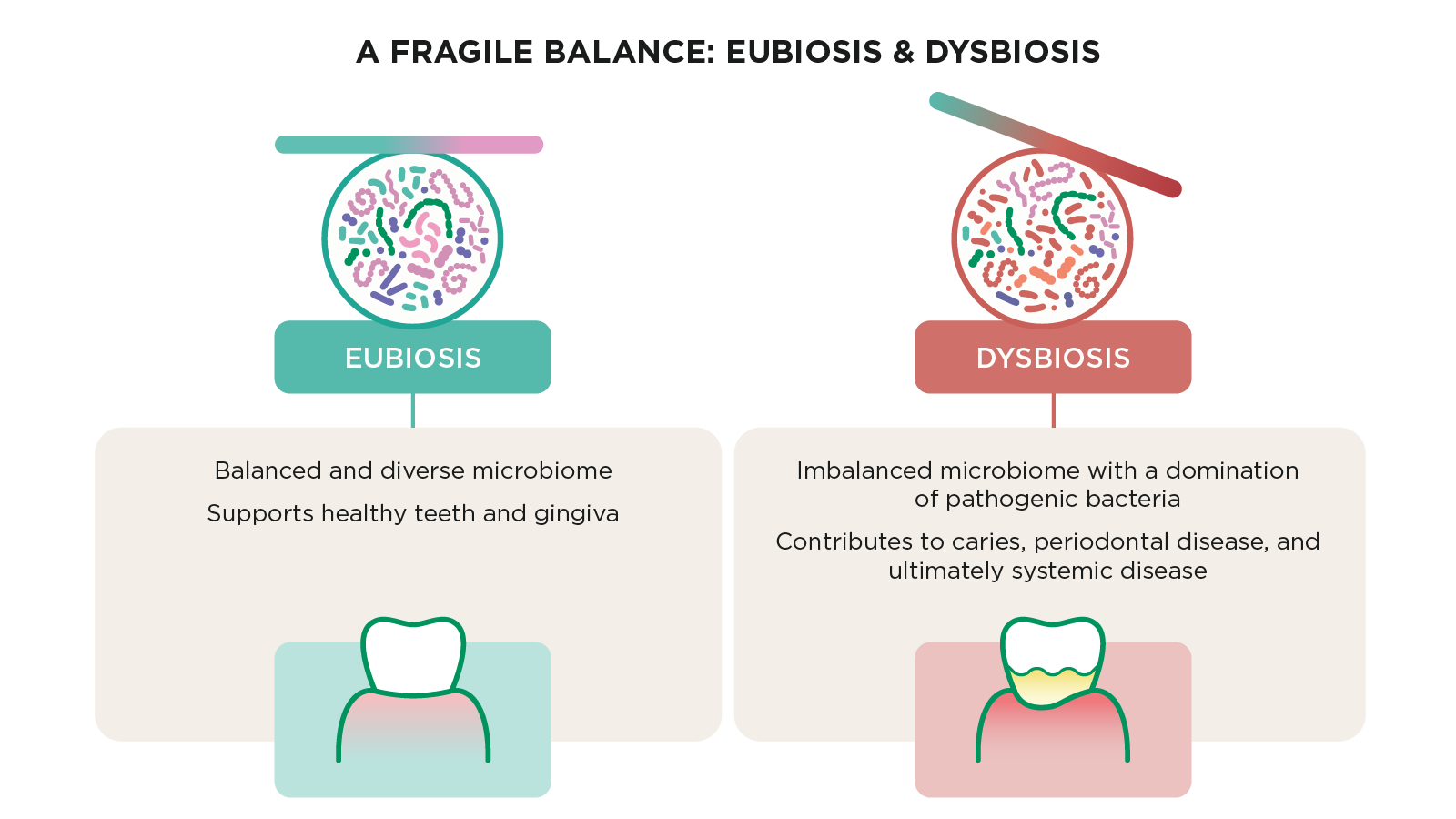
Eubiosis describes a state of beneficial balance — a diverse, stable microbial community in which beneficial species maintain appropriate checks on potentially pathogenic ones, and the relationship between microbiota and host is mutually supportive.
A broad, varied microbiome is more functionally resilient; when one species is disrupted, others can compensate. When diversity declines, that redundancy is lost, and the ecosystem becomes far more vulnerable to pathogenic dominance.
Dysbiosis describes the disruption of that balance. When beneficial species decline, and pathogenic bacteria gain dominance, the ecosystem shifts into a state that is actively harmful to the host.
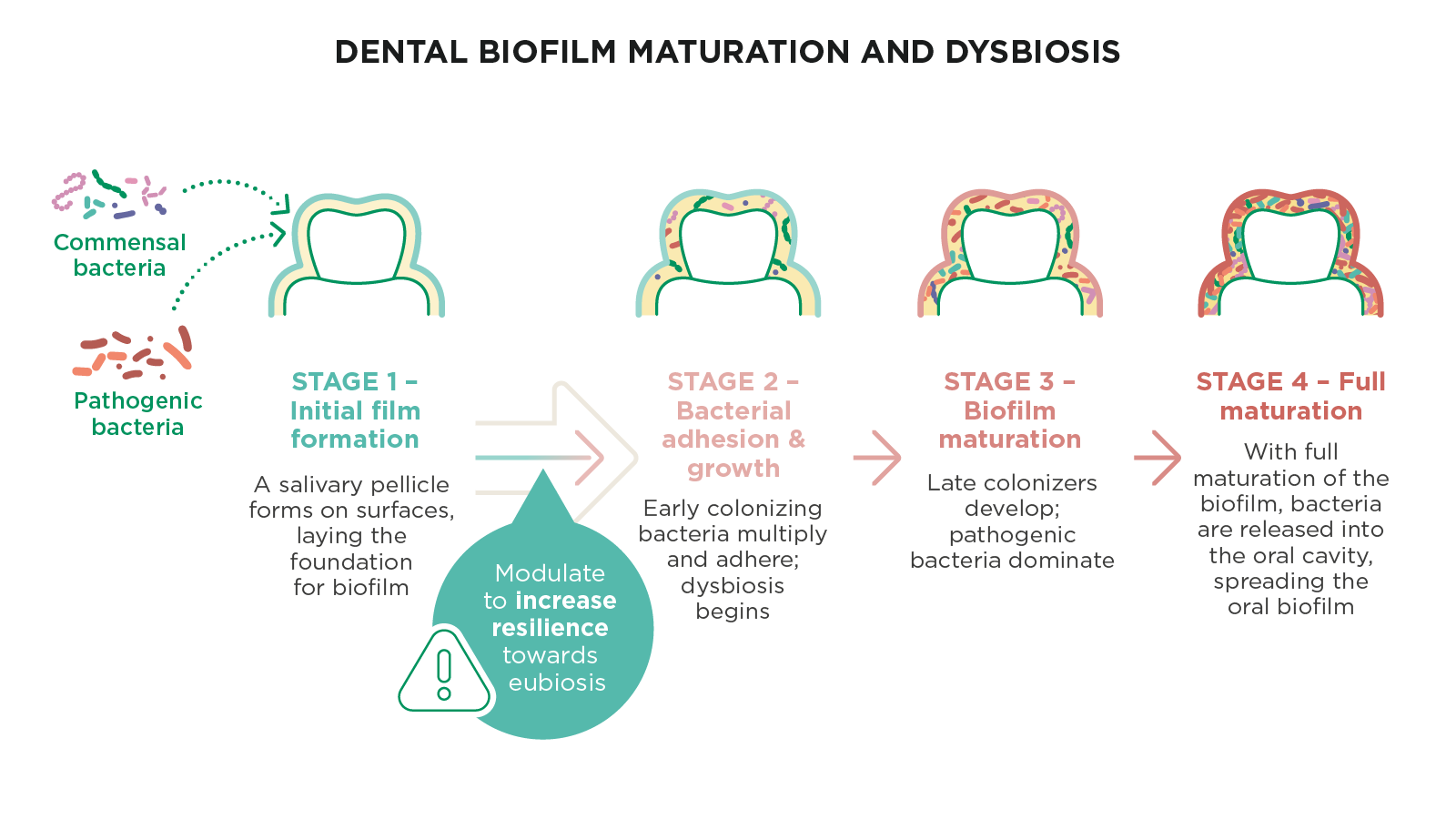
Importantly, dysbiosis is not simply a passive response to neglect. It can become self-sustaining. As the biofilm matures and pathogenic communities establish themselves, they develop resilience, making the restoration of eubiosis progressively more difficult.
Eubiosis describes a state of beneficial balance — a diverse, stable microbial community in which beneficial species maintain appropriate checks on potentially pathogenic ones, and the relationship between microbiota and host is mutually supportive.
A broad, varied microbiome is more functionally resilient; when one species is disrupted, others can compensate. When diversity declines, that redundancy is lost, and the ecosystem becomes far more vulnerable to pathogenic dominance.
Dysbiosis describes the disruption of that balance. When beneficial species decline, and pathogenic bacteria gain dominance, the ecosystem shifts into a state that is actively harmful to the host.
Importantly, dysbiosis is not simply a passive response to neglect. It can become self-sustaining. As the biofilm matures and pathogenic communities establish themselves, they develop resilience, making the restoration of eubiosis progressively more difficult.
The biofilm: essential, but only when kept in check
The oral biofilm (dental plaque) is the structural home of the oral microbiome. As biofilm matures without disruption, its microbial character shifts: beneficial species decline and potentially harmful bacteria gain dominance, making the restoration of balance progressively more difficult.
This is the clinical window that matters, and why brushing at least twice daily with appropriate tools and technique, combined with interdental cleaning, remains the essential first line of microbiome stewardship.
The result is the foundation for systemic consequence.
The oral microbiome and systemic health: a connection that can no longer be ignored
The oral–gut axis
The oral microbiome is the second-most diverse microbial community in the human body, surpassed only by the gut microbiome. The relationship between the two is direct and bidirectional. The oral–gut axis means that beneficial or harmful shifts in the oral microbiome are not contained to the mouth. They are linked to corresponding changes in gut microbial composition with downstream implications for metabolic function, immune regulation, and systemic inflammatory status.
From local imbalance to systemic risk
Persistent oral dysbiosis has been associated with chronic low-grade inflammation and with systemic conditions including cardiovascular disease, diabetes, adverse pregnancy outcomes, rheumatoid arthritis, Alzheimer’s disease, and certain cancers.
Diabetes and oral dysbiosis are mutually reinforcing: dysbiosis elevates systemic inflammatory markers that worsen insulin resistance, while elevated blood glucose in diabetic patients alters salivary composition and increases susceptibility to further microbial imbalance. Similar bidirectional relationships have been identified with cardiovascular disease, obesity, inflammatory bowel disease, and, in emerging research, Alzheimer's disease and colorectal cancer.
This is not a claim that periodontal disease causes diabetes - the relationship is more nuanced than that. But it is a well-supported argument that the state of the oral microbiome is a meaningful variable in systemic health outcomes, and that dental professionals are uniquely positioned to influence it.
The immune system is the critical mediating factor in this relationship; something we'll explore in depth in the next piece in this series.
What this means for your practice
A broader clinical role and a richer patient conversation
None of this science undermines the clinical fundamentals. Effective plaque removal remains the cornerstone of oral health management. But the oral microbiome framework deepens what that work means and extends the conversation available to you in the clinical chair.
When a patient presents with recurrent gingivitis despite adequate brushing and flossing, the microbiome lens opens questions about diet, stress, hydration, and immune status that a plaque-removal model alone would not prompt.
When a patient with type 2 diabetes asks about their gum health, the oral–systemic connection gives you evidence-based context that positions your role well beyond the mouth.
Prevention, education, and the emerging toolkit
Three areas of clinical opportunity emerge directly from the oral microbiome science: early intervention, patient education, and adjunctive strategies.
Understanding the microbiome reinforces the value of early intervention and places patient lifestyle squarely within the scope of clinical advice.
Patient education becomes more meaningful when grounded in the ecosystem concept. Patients who understand why balance matters (not just that they need to remove plaque) are more likely to engage with the behaviours that support it. Explaining the oral microbiome in accessible terms ("think of it as the community of oral microbes that keeps your mouth in balance and your body protected") fosters long-term understanding and compliance.
Emerging adjunctive strategies (including oral prebiotics such as xylitol and arginine, and oral-specific probiotic strains) are beginning to extend the clinical toolkit beyond mechanical and chemical approaches. We'll explore the evidence for these in depth later in this series.
Going beyond: the mouth as a window to whole-body health
The understanding of the oral microbiome is already reshaping how researchers and clinicians think about the relationship between oral health and the rest of the body.
For dentists and hygienists, this science represents an expansion of your clinical framework, a deepening of your patient relationships, and a strengthening of your role as a partner in whole-body health.
The mouth, as it turns out, offers one of the clearest views of health we have.
This blog draws on findings from the GUM® Oral Health White Paper Series: Rethinking Oral Healthcare — Exploring the Resilience and Modulation of the Oral Microbiome (2025), developed in collaboration with Prof. Egija Zaura (ACTA, Netherlands) and Prof. Dr. Wim Teughels (KU Leuven, Belgium).
Oral microbiome FAQs
The oral microbiome is the community of microorganisms - including bacteria, fungi, and viruses - that live in the mouth and play an active role in maintaining oral and systemic health. More than 700 bacterial species have been identified within it, with a healthy individual typically hosting around 200 at any one time. A balanced oral microbiome is essential to health.
Eubiosis is a state of healthy microbial balance in the mouth, where diverse beneficial bacteria keep potentially harmful species in check. Dysbiosis is the disruption of that balance, in which pathogenic bacteria dominate and microbial diversity declines. Dysbiosis is associated with caries, periodontal disease, and (through systemic inflammation) conditions including diabetes and cardiovascular disease.
Patients presenting with the following signs may be experiencing oral dysbiosis: persistent bad breath, bleeding or inflamed gums, increased tooth sensitivity, frequent mouth ulcers, and dry mouth. Recurrent dental caries and progressive gum disease, despite regular brushing, can also indicate that the microbial balance in the mouth has shifted. These presentations are worth exploring through a microbiome lens in the clinical assessment.
For patients asking this question in the chair, you can inform them that improving the oral microbiome involves both mechanical and lifestyle measures. Brushing twice daily and interdental cleaning disrupt biofilm before it matures into a dysbiotic state. Reducing sugar intake, staying well hydrated, eating a diet rich in fibre and vegetables, and managing stress all support a healthier microbial balance. Emerging evidence also points to the benefits of oral prebiotics such as xylitol, arginine, and dietary nitrate, and oral-specific probiotics as adjunctive tools.
Restoring the oral microbiome after disruption begins with re-establishing the conditions that support beneficial bacteria. This means advising patients of the importance of consistent mechanical cleaning, reducing dietary sugar intake, stopping smoking, and addressing dry mouth when present. Oral probiotics (particularly strains specific to the oral cavity) show growing evidence for rebalancing the microbial community. In cases of established periodontal disease, professional treatment is essential before adjunctive strategies can be effective.
No single food overrides the whole picture, but nitrate-rich vegetables such as beetroot, spinach, and leafy greens are among the best-evidenced dietary supports for the oral microbiome. When nitrate from these foods encounters oral bacteria, it is converted into nitric oxide, which has antimicrobial properties against pathogenic anaerobic bacteria and helps maintain a healthy oral pH. High sugar consumption is one of the most significant dietary drivers of dysbiosis.
Saliva is one of the most important regulators of oral microbiome health. It provides moisture and nutrients for beneficial bacteria, delivers antimicrobial proteins that limit pathogenic overgrowth, and maintains a neutral pH, preventing acid-tolerant species from dominating. Reduced saliva flow (known as hyposalivation) significantly increases the risk of dysbiosis and is associated with higher rates of caries, periodontal disease, and oral infection.
Because the oral microbiome interacts directly with the immune system, sustained microbial imbalance in the mouth can drive chronic low-grade inflammation that extends beyond the oral cavity. This systemic inflammation has been linked to an increased risk and severity of conditions, including type 2 diabetes, cardiovascular disease, and obesity. The oral cavity is also directly connected to the gut via the oral–gut axis, meaning microbial shifts in the mouth can influence gut microbiota composition and broader metabolic health.
Related Articles
-
How Oral Microbiome Resilience Is Reshaping Prevention and Care - Let's Talk Oral Health Explore how resilience in the human oral microbiome is reshaping prevention, periodontal care, and long-term oral and systemic health.
-
Probiotics in Pregnancy Hormonal changes during pregnancy can easily lead to gingivitis or periodontitis. Probiotics are a safe and effective adjunct in the management of gum disease.

-
Probiotics and Dentistry: Key Facts and Findings While research into the oral microbiome is ongoing, the early indications about probiotic benefits are as promising as the prospects.

-
Probiotics Reduce Candida Albicans in Elderly Patients Learn about the unique oral health risks faced by older adults, including candidiasis, and the factors contributing to increased susceptibility.

-
The Effect of Probiotics for Oral Health: Cleaning Up Infections The latest scientific evidence shows that the probiotic Lactobacillus reuteri Prodentis (contained in GUM® PerioBalance®) supports the health of gums and teeth.
-
Lactobacillus reuteri Prodentis, Probiotic for Maintenance of Healthy Gums Multiple studies confirm that Lactobacillus reuteri Prodentis contained in GUM PerioBalance has plaque inhibition, anti-inflammatory, and antimicrobial effects.
-
Probiotics and Their Use in Peri-Implant Mucositis Can probiotics help with peri-implant mucositis? Two highly promising studies show that probiotic can bring to a significant improvement in clinical parameters.
-
What Today’s Dental Professionals Should Know About Oral Microbiome The oral microbiome is a keen area of research today, owing heavily to its role in periodontal disease as well as systemic health conditions.

-
Gut and Oral Microbiomes: Their Impact on Overall Health Learn about the connection between the gut and oral microbiomes and their impact on overall health. Key insights for patient care.
-
Oral Health and Overall Health: Their Impact on Each Other Discover evidence-based behavioral change strategies for preventing oral diseases.

-
Physical Activity and Periodontitis: Effects on Oral Microbiome Explore the evidence linking physical activity to periodontitis, including effects on periodontal health, systemic inflammation, and oral microbiome composition

-
Lifestyle Medicine and Oral-Systemic Health - Let's Talk Oral Health In this second episode, Dr. Crystal Marruganti explores multimorbidity and how lifestyle and behavior shape outcomes.
-
The Oral Microbiome in Health and Disease Discover how managing the oral microbiome can be an effective tactic in a 360° strategy to prevent periodontal and peri-implant diseases.
-
Oral Microbiome Management: A Guide for Dental Professionals Why do some patients keep relapsing? Explore how oral microbiome management, probiotics for oral health, and biological modulation are changing dentistry.
-
Oral Microbiome Balance: A Maintenance Guide for Hygienists Plaque removal is just the start. Learn how hygienists can maintain oral microbiome balance through biofilm management, lifestyle advice, and probiotics.
-
The Periodontal Ligament: Biology, Disease & Regeneration Professor Satoru Yamada joins Let's Talk Oral Health to explore the periodontal ligament's role in periodontal health, disease progression, and regenerative therapy.
-
Stress and Oral Health: Implications of Chronic Stress As mounting evidence points to chronic stress as a clear risk indicator for periodontal disease, dental professionals should get proactive in addressing it.
-
Oral Health and Rheumatoid Arthritis: Key Facts and Findings The dental community should be aware of growing evidence around the links between oral health and rheumatoid arthritis.

-
How Lifestyle Factors Affect Periodontal Disease If your patients have questions about how their lifestyle may affect their risk of developing periodontal disease, this is reliable information you can provide.

-
How Inflammatory Bowel Diseases Increase Oral Health Risk Patients suffering from IBDs are at an increased risk of developing periodontitis because the diseases modify their oral microbiota and inflammatory processes.

-
Delivering Innovative Oral Care for Your Dental Patients How can dental professionals take advantage of the latest technology, research, and best practices to provide cutting-edge service for their patients?

-
Educate Patients on Proper Gum Care for Diabetes Control The benefits of oral hygiene go beyond tooth and gum health. Patients need to understand how gum disease can affect conditions like diabetes and vice versa.

-
Understanding the Role of Oral Bacteria in Colorectal Cancer Data from research around the role of F. nucleatum in the progression of colorectal cancer is too striking for dental professionals to ignore.