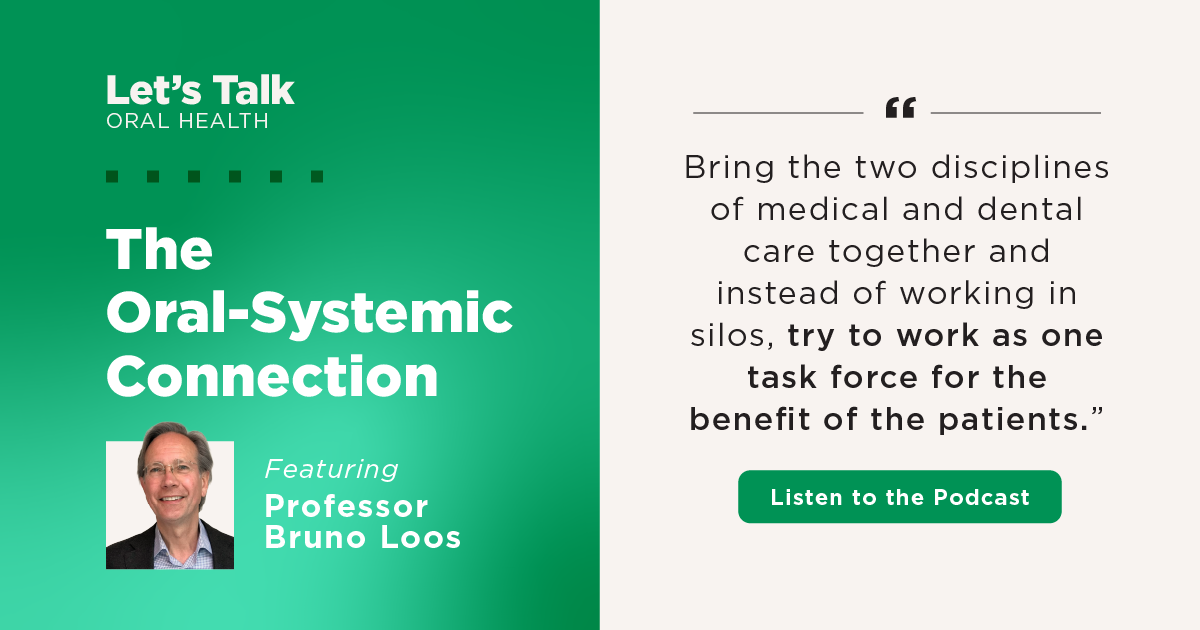
The Oral-Systemic Connection: How Oral Health Shapes Whole-Body Well-Being
Let's Talk Oral Health returns for a new season, bringing fresh perspectives from global experts on how oral health shapes systemic well-being.
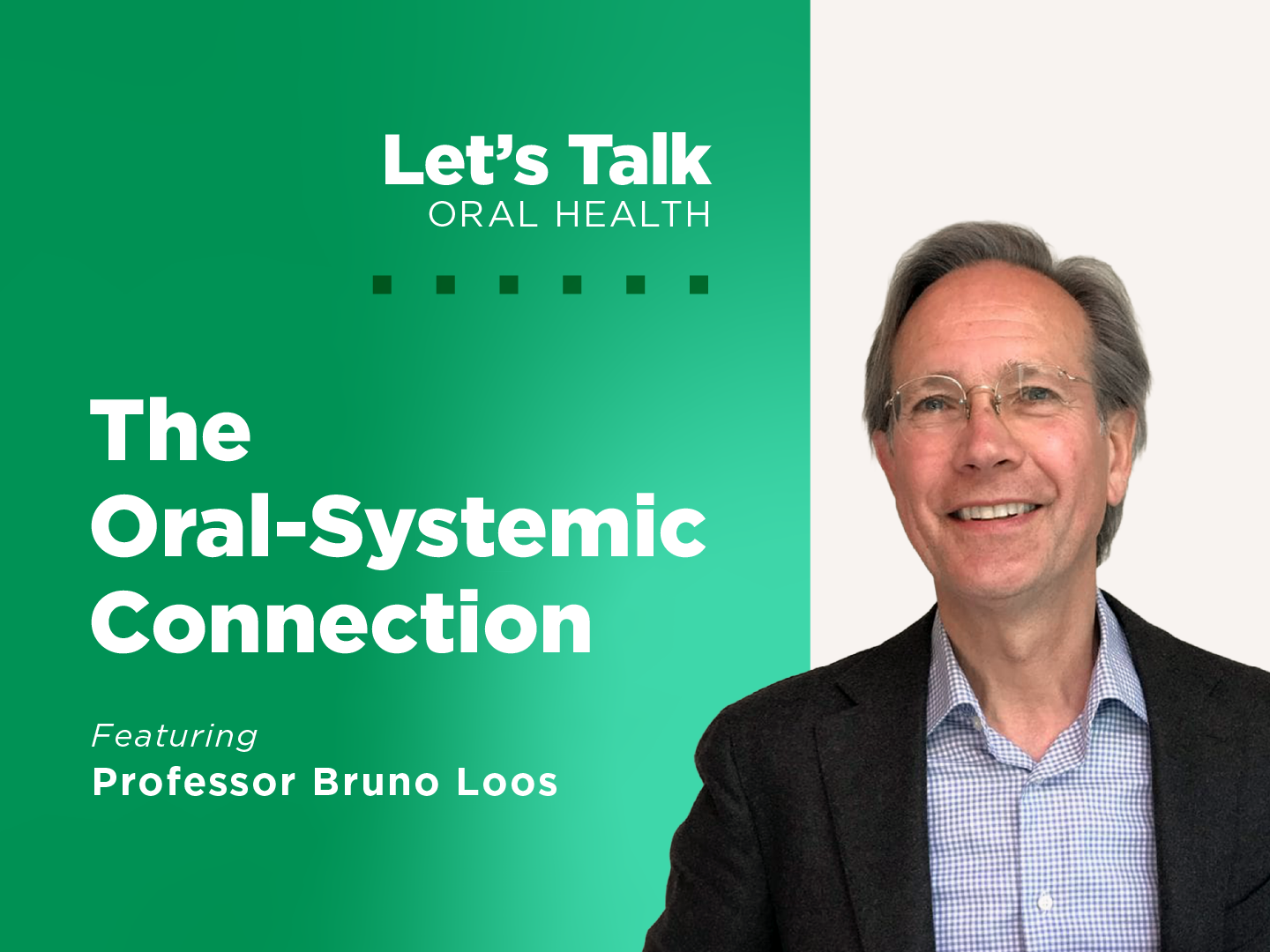

In this first episode, hosts Rachel Chau, DDS and Martijn Verhulst, PhD sit down with Professor Bruno Loos, renowned authority in periodontal medicine, to explore the intricate links between gum periodontal disease and conditions such as diabetes, cardiovascular disease, and obesity.
The conversation also explores emerging insights on inflammation, immune fitness, and how innovations like Ozempic and artificial intelligence may reshape the future of periodontal care.
Here’s a closer look at some of the key insights and takeaways from their conversation.
Oral Health and Systemic Disease
Professor Loos revisits the well-documented, two-way relationship between diabetes and periodontitis, noting that each can worsen the other through chronic inflammation.
When blood sugar is poorly controlled, periodontal inflammation tends to increase; when periodontal diseases go untreated, it can make metabolic control more difficult.
Studies show that treating periodontitis can reduce HbA1c by about 0.5%, a significant and measurable improvement on top of standard diabetes care, equivalent in effect size to an additional drug.
For clinicians, the message is simple: collaboration between dental and medical professionals is essential.
Screening, sharing insights, and cross-referrals can improve outcomes for both oral and systemic health.
The Cardiovascular and Obesity Links
The connection doesn't stop at diabetes.
Prof. Loos also highlights four decades of research linking periodontal and cardiovascular diseases, both driven by inflammation.
New evidence points to specific subgroups of periodontitis patients who may face higher cardiovascular risk rather than the whole population — a factor that makes personalized prevention even more important.
The episode also explores obesity as an inflammatory condition, where excess fat tissue releases cytokines that amplify systemic and oral inflammation. Prof. Loos even touches on early findings around GLP-1 drugs like Ozempic, which may have unexpected anti-inflammatory effects. Together, these insights reveal how interconnected the mouth and body truly are-and why inflammation remains at the heart of both challenges and new opportunities for care.
Inflammation, Immune Fitness, and Preventive Care
As the conversation turns to prevention, Professor Loos introduces the concept of "immune fitness" — the idea that, much like physical fitness, the immune system can be strengthened or weakened over time.
Factors such as nutrition, vitamin levels, weight, smoking, and stress all influence how well the body can regulate inflammation and respond to disease. In Prof.Loos's view, supporting immune fitness means not only treating oral disease but also helping patients build healthier habits that protect both their oral and overall health.
He emphasizes that dental professionals have a unique opportunity to act as coaches for systemic health, using their relatively frequent contact with patients to encourage small but meaningful lifestyle changes.
Discussing smoking cessation, weight management, or dietary improvements during routine care can have ripple effects far beyond the oral cavity.
From Pathogenesis to Salutogenesis
In one of the episode's most thought-provoking moments, Professor Loos discusses his recent interest in salutogenesis, a framework that asks not why people develop disease, but why some remain healthy despite risk factors. Rather than focusing solely on the causes of periodontitis, salutogenesis examines the protective genetic, behavioral, and lifestyle elements that help individuals resist chronic inflammation.
Prof. Loos explains that this perspective shifts attention toward health creation instead of disease management.
Factors such as balanced nutrition, nonsmoking habits, regular oral hygiene, and even psychological resilience all play a role in maintaining immune balance and preventing destructive inflammation.
His team also considers how cultural and environmental influences, like traditional diets or community support systems, can help people achieve longevity and better oral-systemic health.
Looking Ahead: AI and the Future of Periodontal Medicine
As the discussion turns toward the future, Professor Loos expresses cautious optimism about how AI could transform preventive care in dentistry and beyond. AI's strength, he notes, lies in its ability to analyze vast amounts of clinical data to predict disease risk, helping practitioners identify early warning signs long before symptoms appear.
Prof. Loos points to emerging research using AI to predict thousands of systemic conditions based on medical records, suggesting that similar models could soon be applied to oral-systemic links. In his view, this could mark the next major leap in periodontal medicine; one that empowers professionals to not only treat disease, but anticipate and prevent it.
The Mouth as a Mirror of Whole-Body Health
Professor Loos's insights remind us that oral health is inseparable from overall health, and that prevention begins with awareness. To hear the full discussion on inflammation, immune fitness, and the future of periodontal care, listen to the complete episode of Let's Talk Oral Health with Professor Bruno Loos.